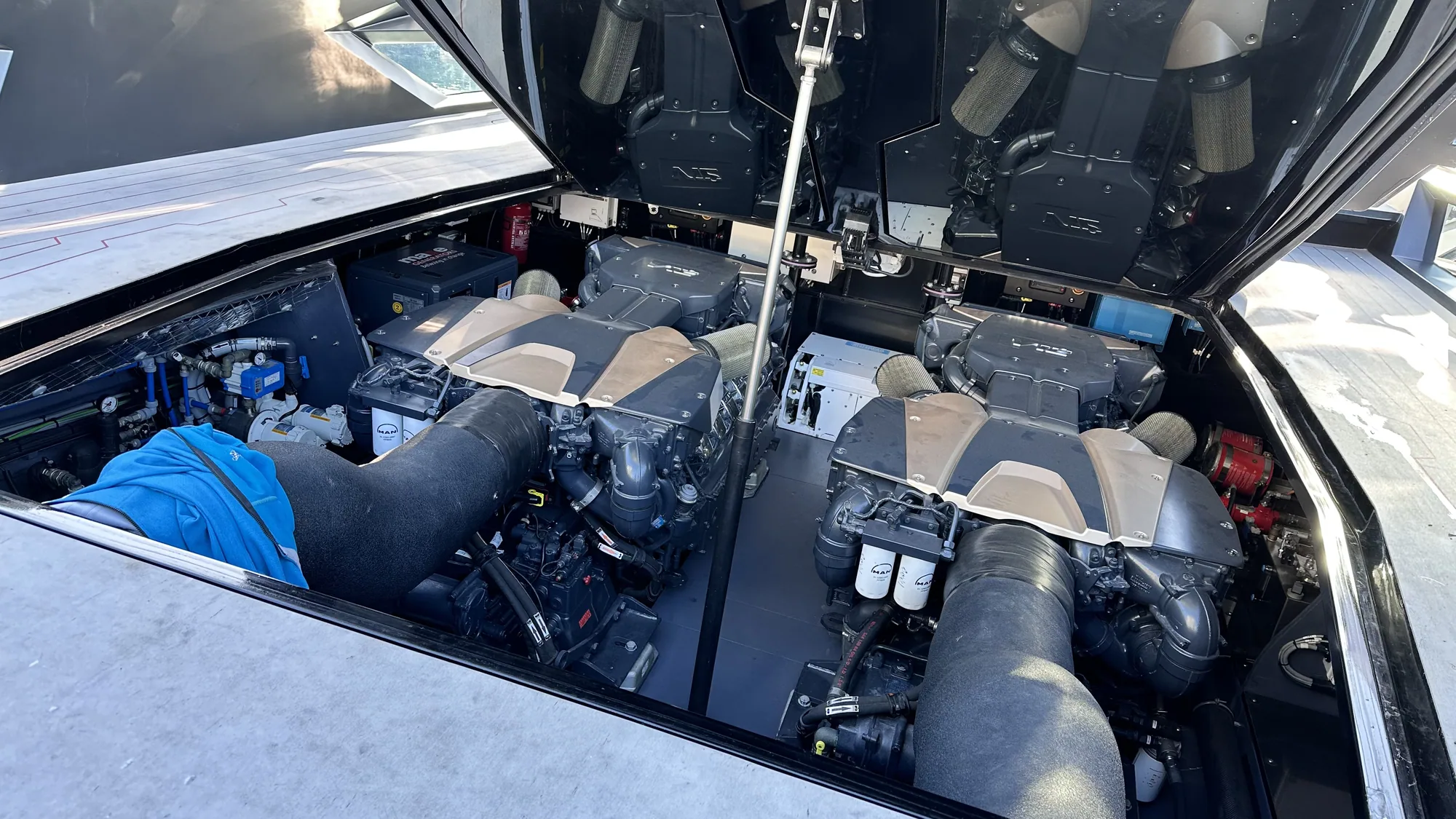
The first one I found, I was standing in the cabin of a Formula 430 SSC on survey day. This was before I was even a broker. I was there as the buyer’s guy.
The surveyor lifted the hatch in the cabin floor. I put a light down into the cabin bilge. There were salt crystals sitting on the stringer like frost.
Not damp. Not a stain. Crystals, dry and white, in a compartment that should never see salt water at all.
That boat had gone down to the cabin at its own dock. Nobody had told the buyer.
How can you tell if a boat has been sunk?
Look in the places nobody cleans, not at the shiny parts. Salt leaves a signature, water leaves a level, and repairs leave a mismatch. A boat that went down and came back up will show you at least two of those three, and usually all three, as long as you know where to put the light.
The seller is not always hiding it, by the way. Plenty of owners bought a boat that had been under and were never told either. Even so, the burden is on you to find it before your money moves.
A note on the photographs here. They are from other boats I have worked on, not from the Formula in that story. They are included to show you what each tell actually looks like.
Where does salt show up on a boat that has taken on water?
Salt water evaporates and leaves the salt behind. That salt sits in whatever low corner it dried in. Then it stays there for years, unless somebody goes after it with fresh water and a rag.
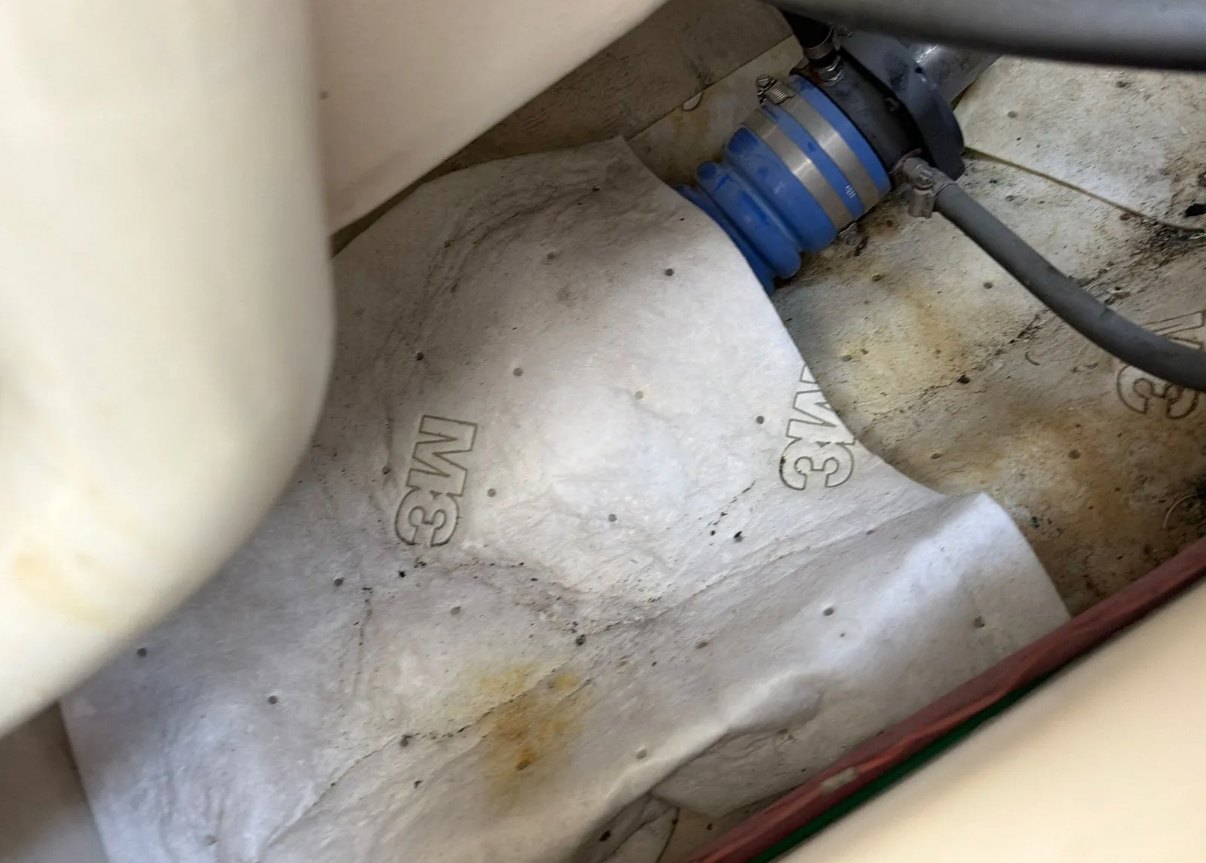
People clean what they can see. In practice, nobody cleans the underside of a fuel tank. Nor the back corner of a lazarette, the inside of a chain locker, or the void behind a battery box.
So that is where to look first, with a bright light and a phone camera on a stick:
- Cabin bilges and any compartment forward of the engine room
- The underside of tanks, and the hull skin beneath them
- Wire looms where they pass through a bulkhead, especially the top of the loom
- The inside faces of lockers, above where water normally sits
- Under the helm, behind the dash, at the back of the breaker panel
White crusting on a stringer in a dry compartment is not condensation. Instead, it is a boat telling you it was once full of ocean.
How does a water line give away a boat that sat in water?
Water finds one height and holds it. As a result, a boat that sat submerged for a few hours carries a line. That line will be dead level across every surface it touched.
Look for staining or a change in texture at a consistent height. Check the bulkhead, the stringer, and the back of a locker. Then ask whether that elevation makes any sense.
Bilge water sloshing at sea makes a messy, uneven mark low down. By contrast, a boat that sat full of water makes a ruled line. Furthermore, it makes that line somewhere water has no business reaching.
In practice, the giveaway is when the line sits above something expensive. For example, if it runs across the top of the starter motor, you are not looking at a wet bilge.
If you have found a boat and have not talked to a broker about it yet, send me the listing.
Why is a new engine room on an old boat a warning sign?
When a boat goes under, the insurer replaces what got wet: generators, stabilizers, wiring, pumps and electronics. The main engines often stay, because rebuilding a pair costs more than the settlement. So you end up with an engine room where everything is new except the two most important things in it.
This is the one that gave the Formula away, once I knew what I was seeing.
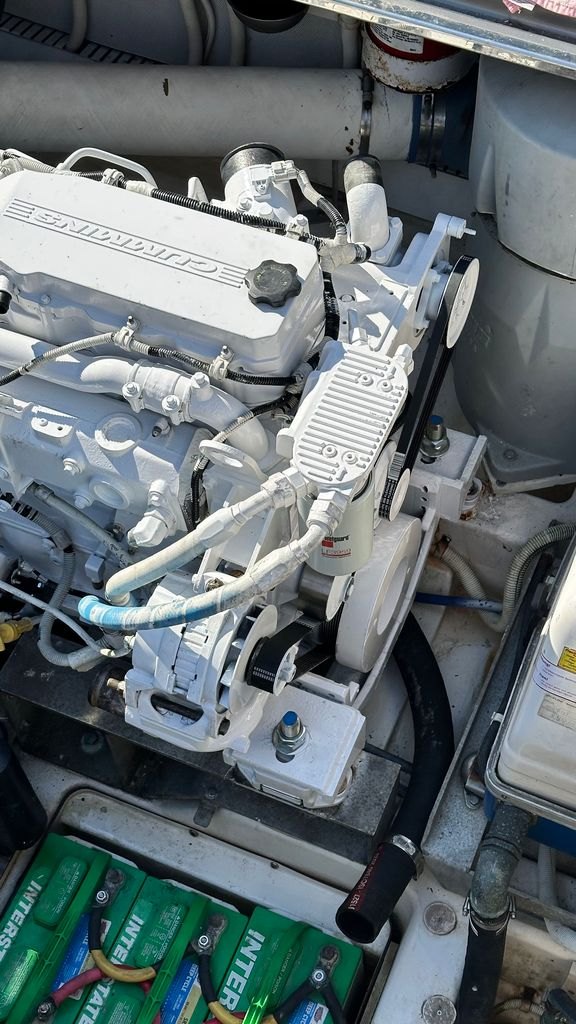
On that Formula, the Seakeeper was new. The generator was new. The wiring was new. Meanwhile the motors were original, and they had been underwater.
I worked my contacts at Formula until I reached the top and confirmed what had happened. My buyer walked. Even today I would give him the same advice, because you cannot un-soak a wiring harness.
Where does corrosion show up after a boat has been underwater?
On surfaces facing down and facing away, because air gets everywhere but salt water settles. Check the back of the breakers, the underside of bus bars, the bottom of the engine mounts, the lower transmission bolts, the underside of the alternator and the back of the starter. Silt where gravity never carried it counts too.
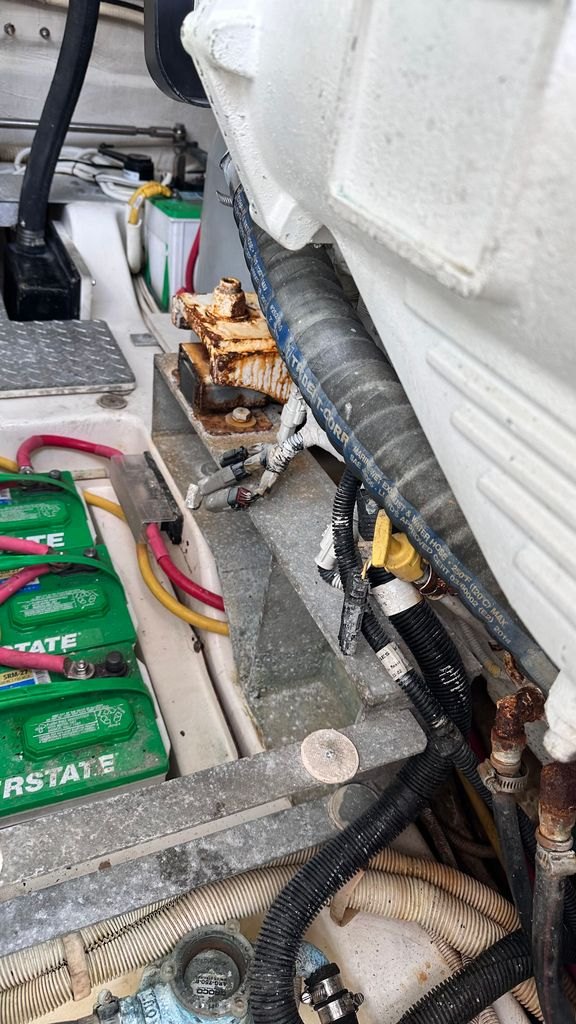
Green powder on the low side of a terminal, on a boat with a clean deck, is worth more than any answer a seller gives you.
Meanwhile, silt is the other one. Sand or fine gray mud in a place gravity never carried it means that compartment was full of standing water.
In short, learning how to tell if a boat has been sunk is mostly learning to look at the surfaces nobody photographs.
Will a boat’s paperwork show that it went under?
Sometimes. A total loss usually leaves a trail, but a boat that was raised, repaired and never claimed often leaves nothing at all. Read the service invoices rather than counting them. A cluster of electrical and machinery work inside one three month window, with nothing before or after, is a repair, not maintenance.
I will tell you plainly that records get edited. For example, I once took a listing where the seller handed me a four inch stack of them. I had the stack scanned and sorted.
The history showed major fiberglass and engine work, consistent with the boat having delaminated and taken on water. The owner confirmed it privately. Then he told me to pull those invoices out and say nothing.
I refused. He yelled at me and fired me on the spot, and the listing agreement was cancelled.
For the record, that boat was sellable. Disclosed, documented, and signed off by a surveyor, somebody buys it at the right number. Hidden, it is a lawsuit waiting for whoever signs.
Before you make an offer
Send me the listing before you contact anyone about it. I will tell you what I would ask the listing broker before anyone spends money on a haul out.
Should you buy a boat that has taken on water?
You can, if it is disclosed and priced as what it is. None of this takes a wet boat off the table. It means going in with your eyes open, because submerged wiring can leave you with constant electrical faults and a repair bill most months, and that is a cost you should price in before you offer.
I used to look after a VanDutch 40 whose owner bought it as a project. He knew it had taken a lot of salt water in the engine room. He went in with his eyes open.
Even so, the submerged wiring left him with constant electrical faults. There was a repair bill most months for as long as I was involved with that boat.
He is fine with that because he chose it. Had the same boat been sold to him as clean, he would have been furious, and rightly so.
That is the real lesson. Salt in the wiring does not get fixed, it gets managed. Therefore the only version of this deal that works is the one where you knew going in and paid accordingly.
What I ask before a client buys
When a client wants a boat, I ask the listing broker directly whether she has ever taken on water, and I ask for the service records.
No service records is a red flag. And the records often answer the first question anyway.
After that, the rest of the buying process is a lot simpler. I walk through the running side of it in my sea trial checklist, and the condition side in how I read a wash job.
Common questions
Can a marine survey find a boat that has taken on water?
A good surveyor will catch it, and that is exactly what you hire one for. Even so, the surveyor is aboard for a few hours on a single day. Knowing the tells yourself means you can flag a compartment and ask them to look harder while they are there. The Society of Accredited Marine Surveyors lists accredited surveyors by area.
Does a boat that has taken on water always show up on a title search?
No. A search may surface a documented total loss. However, a boat that was raised, repaired and never claimed will often show nothing. Absence of a record is not evidence the boat is clean.
Are salt crystals in the bilge always a sign of sinking?
Not always. Salt in the engine room bilge can come from a leaking raw water hose or a shaft seal. What matters is location. For example, salt in a dry forward compartment, well above the waterline, is a different problem entirely.
Is a boat that has taken on water ever worth buying?
Sometimes. The sinking has to be disclosed, the repair documented, and a surveyor has to sign off on the work. In other words, you are buying a boat with a permanent electrical question mark, so it needs to be priced like one.
Back to that Formula
My buyer was getting a good price.
I told him I would walk anyway. You cannot un-soak a wiring harness, and he would spend years chasing faults he could not find.
He walked. Ten minutes with a flashlight, in a compartment nobody cleans, saved him from years of it.
That is what how to tell if a boat has been sunk really comes down to. Not a trick, just a light and the willingness to open the panels nobody opens.
If something about a boat is not sitting right with you, that instinct is usually worth listening to. Send me the listing and tell me what is bothering you. I will give you a straight read on whether it is worth a haul out.
Frank Christopher, 954 504 8367. Text me the link.