What does it cost to dock a boat in South Florida?
Plan on roughly $20 to $70 per foot per month. The spread is almost entirely geography. The public county marinas in Miami-Dade are the floor at $20 to $28. The river corridors in both counties sit in the middle. The beach side, on either side of the county line, is the ceiling. Almost no private marina in either county publishes a rate anymore. The public systems in Miami-Dade are the exception, and they are covered further down. You get a number by calling, and it moves with the season, the term, and whether they have room.
This question usually comes too late, from someone who has already signed. The boat is bought. The survey is done. Nobody worked out where it sleeps. Then they start calling marinas and find out the good ones are full and the cheap ones are 4 feet deep.
Work this out before you close. It changes which boat you should buy.
How is dockage actually quoted?
Two ways, and mixing them up will cost you thousands.
Most private marinas in both counties quote per foot per day. Marina Bay Yachting Center on the New River is one of the few that still posts a public rate card, and it does it this way. For a boat in the 45 to 65 foot band their annual rate, meaning a commitment of nine months or more, is $2.25 per foot per day. That works out to about $68 per foot per month, or a little over $800 per foot for the year. Their short term rate for one to four months is $2.55, and transient under 30 days is $3.25. That rate page was last updated in June 2023, so treat it as the shape of the pricing and not a quote.
Other marinas quote per foot per month. The Miami Herald reported in July 2026 that public marinas in Miami-Dade run $23 to $40 per foot per month, with high end superyacht facilities at $60 to $100. Those Miami-Dade figures line up with the county rate card, which is set out further down.
Three things to nail down on the call:
- Do they charge on your boat’s length or on the slip? Bahia Mar Yachting Center bills on vessel length or slip length, whichever is greater. If the only opening is a 60 foot slip, you pay for 60 feet. Catamarans there get charged for two slips.
- What is the minimum? Marina Bay’s card starts at 40 feet. Sands Harbor in Pompano applies a 30 foot minimum charge. Under the minimum, your length does not matter.
- Is electric included? Usually not. Marina Bay meters shore power at $0.016 per kW, or charges $0.10 per foot for 30 amp and $0.35 per foot for 50 amp. Sands Harbor folds electric and water into a $25 per night facility fee. Water and basic wifi are usually free. Power is not.
The winter premium is enormous
South Florida dockage is seasonal, and the swing is larger than almost anyone expects going in.
The Town of Palm Beach Marina publishes a full seasonal rate card for 2026 to 2027, and it is the clearest illustration of this I have found anywhere. Winter runs 1 October to 31 May. Summer runs 1 June to 30 September. Monthly transient rates in winter run roughly 2.2 to 2.9 times the same slip in summer, depending on size.
The Miami-Dade county card does not split by season at all. Those facilities price flat, twelve months a year. If the boat lives here full time rather than snowbirding, that is worth real money, and it is an argument for the county system that has nothing to do with the headline rate.
Broward: the New River and Marina Mile
If you want a full service marina and you care about the number, look inland first. The New River corridor is where the yards are, which means it is also where the dockage is, and it prices below the beach.
The trade is the run to the ocean. From Marina Bay you are working your way east down the river past bridges before you ever see the Intracoastal. On the South Fork the I-95 crossing is a fixed 55 foot bridge, and downtown you have the FEC railroad bridge plus Davie Boulevard, Seventh Avenue, Andrews and Third Avenue, all drawbridges. The drawbridges open, so air draft only matters at the fixed I-95 crossing on the South Fork. That is rarely the problem. The problem is time. Budget 45 minutes to an hour to get out, and understand you will do it every single trip.
For a boat you run most weekends, that gets old. For a boat you run once or twice a month, it is the smartest money in Broward.
Downtown Fort Lauderdale and the city docks
The City of Fort Lauderdale runs municipal docking on the New River out of 450 SW 7th Ave, including Cooley’s Landing and the downtown New River docks. The city lists 100 slips with full utilities on the downtown side. It is walkable to Las Olas and it is city run, which usually means it prices below private.
The city references a Marine Facilities Dockage Rate Card but does not post current numbers where I could find them. Call (954) 828-4626.
Fort Lauderdale beach side: Bahia Mar, Las Olas, 17th Street
This is the most expensive dockage in Broward and the fastest water access. Bahia Mar has around 250 slips and handles boats to 300 feet. Las Olas Marina sits just north of it. Lauderdale Marina near 15th Street has side canal slips built for 70 to 100 foot boats on a first come basis. None of them post rates. All three want a phone call.
What you are buying here is Port Everglades. It is a commercial deep water inlet, it is open in almost any condition, and from a slip near 17th Street you are outside in minutes.
What you are paying for besides the slip is the bridge. As of February 19, 2026 the Coast Guard made the SE 17th Street bridge schedule permanent. It opens on the hour and half hour, except from 6:50 to 9:10 in the morning and 3:50 to 6:10 in the afternoon Monday through Friday, when it opens once an hour at the top of the hour. If your boat needs that bridge and you fish before work, that rule is now part of your life. Pick a slip on the correct side of it.
Dania Beach
Two very different options a mile apart.
Harbour Towne Marina on the Dania Cut-off Canal takes wet slips up to 200 feet and dry storage up to 50 feet, with a travel lift and service on site. Its selling point is that there are no bridges between it and the Port Everglades inlet. That is a real advantage over anything on the New River, at a location that still is not beachfront pricing.
Dania Beach Marina, the municipal one, is a different animal. Waterway Guide lists approach and dockside depth at 4.0 feet, with 30 and 50 amp service. A boat drawing four and a half feet does not belong there regardless of price. Check your draft against the depth before you check the rate.
Hollywood
Hollywood has no inlet of its own. Everything based there runs north to Port Everglades or south toward Baker’s Haulover, and you deal with the Sheridan Street and Hollywood Boulevard bridges depending on where you sit. This is workable but it is a compromise position, and the marina options thin out fast compared with Fort Lauderdale and Dania.
Pompano Beach, Lighthouse Point and Hillsboro
North Broward is the value play if you fish.
Sands Harbor in Pompano takes boats to 120 feet with a 30 foot beam and 12 foot draft. It charges a $25 per night facility fee that covers electric, water and the resort amenities, on top of dockage. Per foot rates come by phone.
Hidden Harbour Marina in Pompano tops out at 43 feet overall.
Port 32 Lighthouse Point takes wet slips to 80 feet overall and 24 feet of beam, with 30 and 50 amp at each slip, and sits minutes from the Hillsboro Inlet.
Hillsboro is the whole argument for keeping a boat up here. It is a short run from Lighthouse Point to blue water and you skip the Port Everglades ship traffic entirely. It is also a smaller inlet than Port Everglades and it demands more local knowledge on the way in and out.
Miami-Dade: the county marinas are the cheapest real dockage in South Florida
If price is the whole question, this is the answer, and almost nobody outside the county knows the numbers because they are published in a PDF nobody reads.
Miami-Dade Parks runs six marinas: Black Point, Crandon, Bill Bird at Haulover, Herbert Hoover at Homestead Bayfront, Matheson Hammock, and Pelican Harbor. The fee schedule effective 1 October 2025 sets recreational wet slips per foot per month, stepped by length:
- Herbert Hoover, Homestead Bayfront: $20 to $23
- Black Point and Pelican Harbor: $23 to $26
- Crandon, Bill Bird at Haulover, Matheson Hammock: $25 to $28
Add a utilities access fee of $35 to $50 a month depending on size. Those rates are a fraction of what the beach side charges in either county.
The rate card does not tell you three things. There is no published annual rate, only monthly. There is no published resident versus non-resident pricing. And there is no published waitlist policy. The county tells you to call the marina. So call the marina.
The catch with the county marinas is depth
Two of the cheapest are the shallowest, and this is where people get hurt shopping on price.
Black Point lists an approach depth of 4.9 feet. A boat drawing five feet cannot reliably get in and out of there, and it sits about four and a half miles west of the Intracoastal markers, so it is a long shallow run rather than a quick dip off the waterway.
Matheson Hammock is listed at 5.5 feet on approach and 5.0 dockside. At four feet of draft you are watching the tide. At five you are making a mistake.
Crandon is better at about six feet on approach, but dockside runs anywhere from five to twelve depending on the slip, so which slip they give you matters. Call ahead and ask for one that suits your draft.
Depths shoal. Check any of these against a current chart and a phone call before you sign anything.
Dinner Key and the City of Miami docks
The City of Miami runs Dinner Key in Coconut Grove, Miamarina at Bayside, and Marine Stadium Marina, and unlike most of the private market it publishes a rate card. Effective 1 November 2025:
- Long term, not a liveaboard: $27.50 per foot per month
- Long term liveaboard: $33.50 per foot per month
- Transient: $52.00 per foot per month, or $7.00 per foot per day
Dinner Key is the big one, 587 slips, boats from 30 to 135 feet, maximum draft seven feet, plus a mooring field of more than 250 balls on the east side. The hurricane damage from Irma has been rebuilt across three phases and the work is finished.
It is also completely full. The city’s own language is that all slips are full and on annual contract, and that they work a waiting list as slips come open. Marine Stadium says the same thing. Plan accordingly, because a published rate you cannot buy is not a rate.
The Miami River
The river is Miami-Dade’s version of the New River. Same trade, cheaper dockage in exchange for bridges, and the same working waterfront character, with commercial terminals taking vessels up to about 230 feet along its five and a half miles.
It is the middle of the market rather than the bottom. Hurricane Cove posts $45 per foot per month plus a $70 electrical fee. River Cove runs roughly $1,600 to $3,395 a month for boats in the 40 to 65 foot range, utilities included, annual contracts required, no liveaboards. Both undercut the beach side and neither undercuts the county marinas.
The bridges are the real price. The federal schedule at 33 CFR 117.305 governs ten bridges on the river, and during the week it is restrictive in a way that will shape your whole boating life:
- Brickell Avenue, at the mouth, opens only on the hour and half hour from 7am to 7pm on weekdays
- Brickell, Miami Avenue and SW 2nd Avenue are closed entirely from 7:35 to 8:59am, 12:05 to 12:59pm, and 4:35 to 5:59pm
- The bridges from SW 1st Street up to NW 27th Avenue are closed 7:35 to 8:59am and 4:45 to 5:59pm
Try to come home at six on a Friday and you will sit. Factor that in honestly before you take the cheaper slip.
Miami Beach and Government Cut
This is the expensive end and the best water access in the region.
Miami Beach Marina has around 400 slips and takes boats to 250 feet, with approach and dockside depths around 12 to 13 feet. It does not publish rates. Sunset Harbour Yacht Club is a different animal again, because the slips there are sold rather than rented, as equity in the club, so it trades like real estate rather than dockage.
What you are buying on this side is Government Cut. It was dredged to 50 feet in 2015 for the big ships, it is jettied and well marked, it carries heavy commercial traffic, and critically there is no fixed bridge between those marinas and the ocean. That last point is why every large boat in the county ends up clustered around it.
Air draft decides more than people expect in Miami-Dade
Broward’s constraint is time. Miami-Dade’s constraint is height, and it is worth knowing before you fall in love with a boat.
- Baker’s Haulover Inlet bridge: 32 feet, fixed. That is a hard ceiling on anything using Haulover, and it rules sailboats out entirely.
- Julia Tuttle Causeway: 56 feet, fixed. This is the controlling height for the Intracoastal through Miami-Dade, and it sits below the 65 foot standard you get almost everywhere else on the waterway.
- Government Cut: no fixed bridge at all.
So a boat kept north of Julia Tuttle and running Haulover is working inside a 32 foot ceiling. A boat transiting the Intracoastal through the county is capped at 56. Only the Government Cut side is unconstrained.
A word about Haulover Inlet
Haulover has a reputation and it earned it. The mechanism is simple enough: when the tidal current runs against the swell, it stands the waves up steep and close together. A falling tide with an easterly wind or swell is the combination that hurts people, and the Coast Guard’s own advice is to wait for slack water or an incoming tide rather than force it.
If you are keeping a boat that uses Haulover, you are accepting that some days you do not go out. That is a real cost and it belongs in the decision alongside the rent.
Two votes that could change the Miami-Dade picture
If you are shopping now, you should know the ground is moving under two of these facilities.
Virginia Key goes to voters on 3 November 2026. An $80 million redevelopment of the Rickenbacker and Marine Stadium marina sites would rebuild them as 750 dry slips and 162 wet slips under a long term lease. There is organized opposition arguing it pushes working boaters out. Either way, if you are counting on a rack at Rickenbacker, that is a question with a date on it.
Miami Beach Marina is separately working through a proposed 99 year lease and a redevelopment of the building at its entrance, which also requires a referendum.
Both are live as of September 2026.
What the South Florida market actually looks like right now
Public marinas across that county run $23 to $40 per foot per month, the high end superyacht facilities run $60 to $100, and reporting this summer described slip prices rising and waiting lists growing.
The published rate is the easy part. Getting a slip at it is the hard part, and it is the part people leave until after they have bought the boat.
Can you rent a private dock behind someone’s house?
Yes, and plenty of people do. Expect to pay less than a marina for the same length, sometimes considerably less. You get no fuel, no pumpout, no security gate, no service, and a month to month arrangement that can end when the house sells.
Before you hand anyone a deposit, check three things. Depth at low tide, not at the moment you looked at it. Whether the city and the HOA actually allow the rental, because Fort Lauderdale regulates docks and mooring structures under its land development code and neighborhoods vary. And whether the dock and pilings can take your boat in a blow, which is a question for a professional who inspects structures, not for me and not for the homeowner.
I am a broker. I am not a surveyor and I am not a marine contractor. When the answer matters, pay the person whose job it is.
Is dry stack an option in Broward?
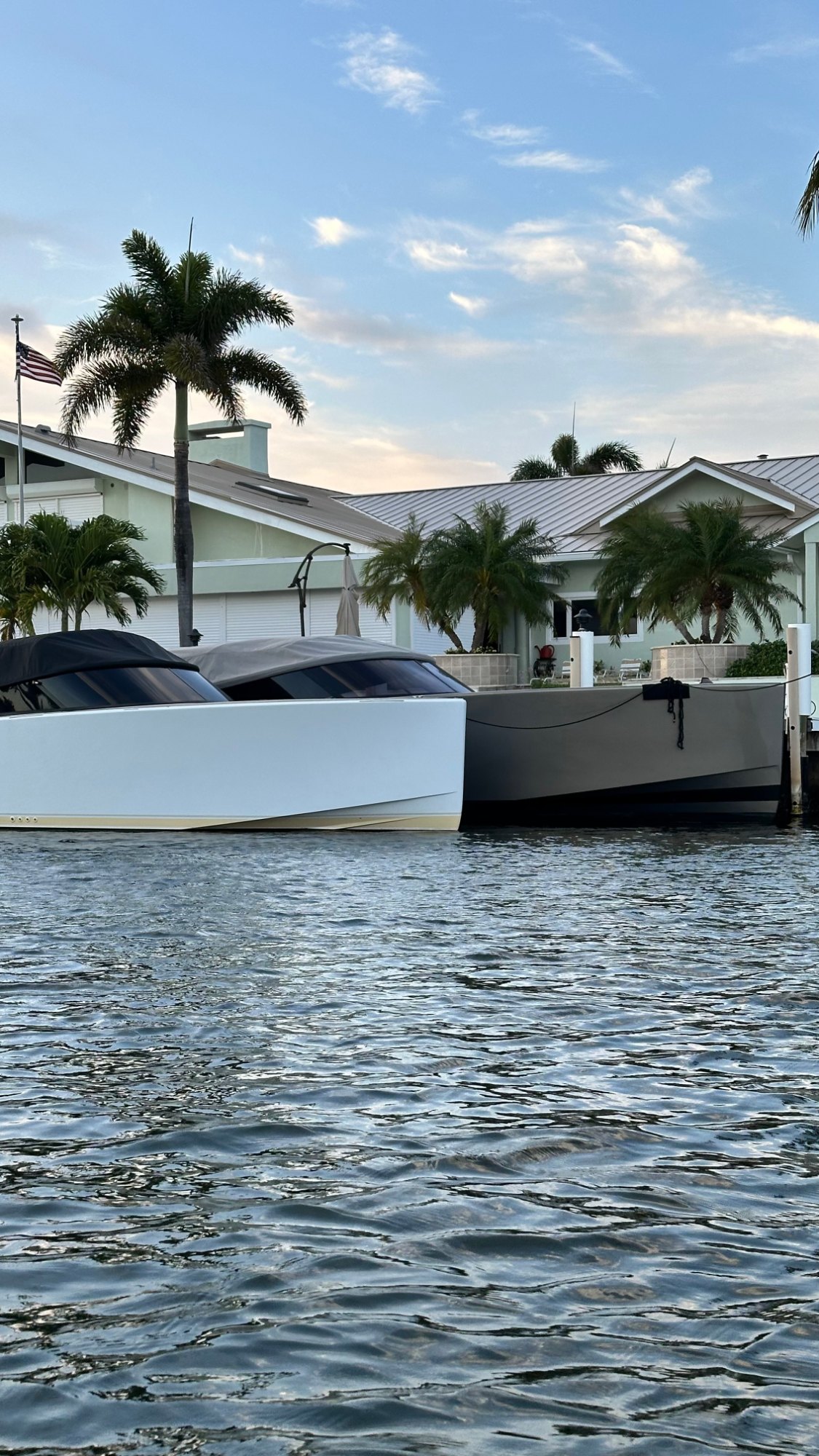
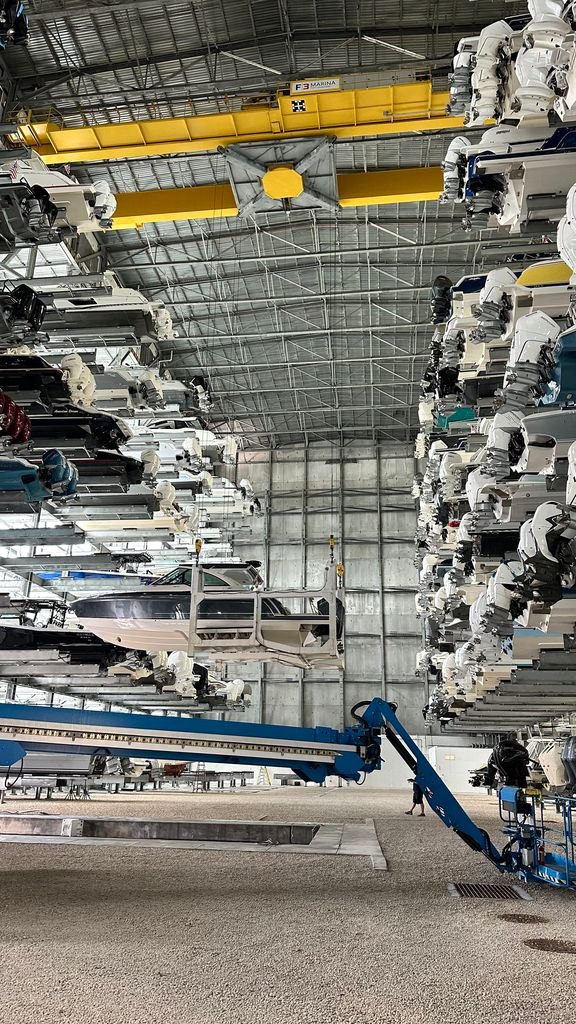
Mostly no. Most Broward racks stop in the low 40s. F3 Marina in Fort Lauderdale takes boats up to 43 feet overall, 13 feet of beam, 17 feet of height and 30,000 pounds wet. Hidden Harbour in Pompano stops at 43 feet.
Two facilities go higher. Harbour Towne in Dania Beach stores up to 50 feet, and Port 32 Fort Lauderdale on the New River lists dry slips for boats up to 55 feet with a building rated to 175 mph wind loads. If your boat is an outboard center console with a modest tower and it fits inside those limits, dry storage is worth pricing. If it has a flybridge, inboards and running gear, you are in a wet slip and that is that.
Dry stack in Miami-Dade
The same hard ceiling applies down here, just at slightly different numbers.
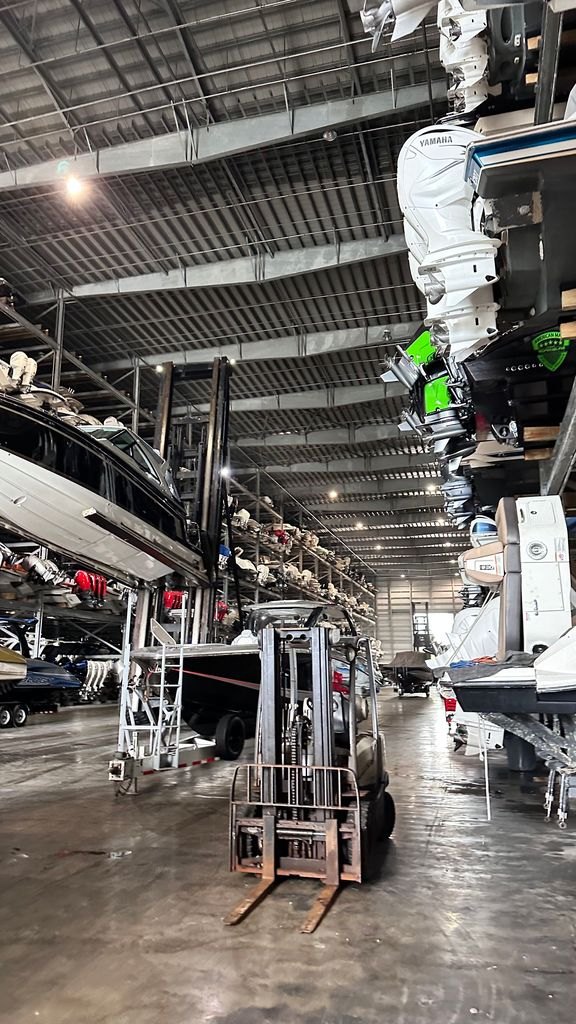
- Haulover Marine Center: 488 racks stacked five high in a building rated for Category 5 wind, boats to 55 feet. Rates by phone.
- Rickenbacker Marina on Virginia Key: up to 350 boats, 50 feet, 40,000 pounds. Rates by phone.
- Marine Stadium Marina: 250 racks, 20 to 40 feet, and it does publish, at $28.35 per foot per month.
- The county marinas take trailer dry storage up to 30 feet at $399.95 a month.
Not one Miami-Dade dry stack publishes its beam or height limits. Ask for all four numbers, length, beam, height and weight, before you assume your boat fits.
Moorings, and the genuinely cheap end
If you can live with a dinghy ride, a mooring is the cheapest legitimate way to keep a boat in South Florida.
Miami-Dade charges flat monthly mooring rates rather than per foot. Crandon Park is $349.95 a month. Matheson Hammock and Pelican Harbor are $299.95. Dinner Key runs a field of more than 250 balls on its east side at $415 a month up to 40 feet, and $490 for 41 to 60.
Coconut Grove Sailing Club, a private club rather than a public facility, publishes an $86.63 facility fee plus $12.72 per foot per month, with a 48 foot maximum.
A mooring is a real option for the right boat and the right owner. It is a poor option if you want to walk aboard with groceries, and it means no shore power, which in this climate means no air conditioning.
What I tell buyers before they close
Call marinas while the boat is still under contract, not after. Ask for the annual rate and the transient rate. Ask whether they bill on your boat’s length or the slip. Ask how power is billed. Ask about liveaboard rules if that is on the table, because policies and fees vary by marina and several will simply say no. And ask what the depth is at your slip at mean low water.
Where the boat lives changes what the boat is worth to you. A boat with an hour of bridges between it and the inlet gets used a lot less than the same boat ten minutes from open water. Same hull. Different life.
If you are working out which boat fits which dock, or you are about to buy and you have not solved this yet, call me.
Frank Christopher, Yacht Broker, Prestige Marine.