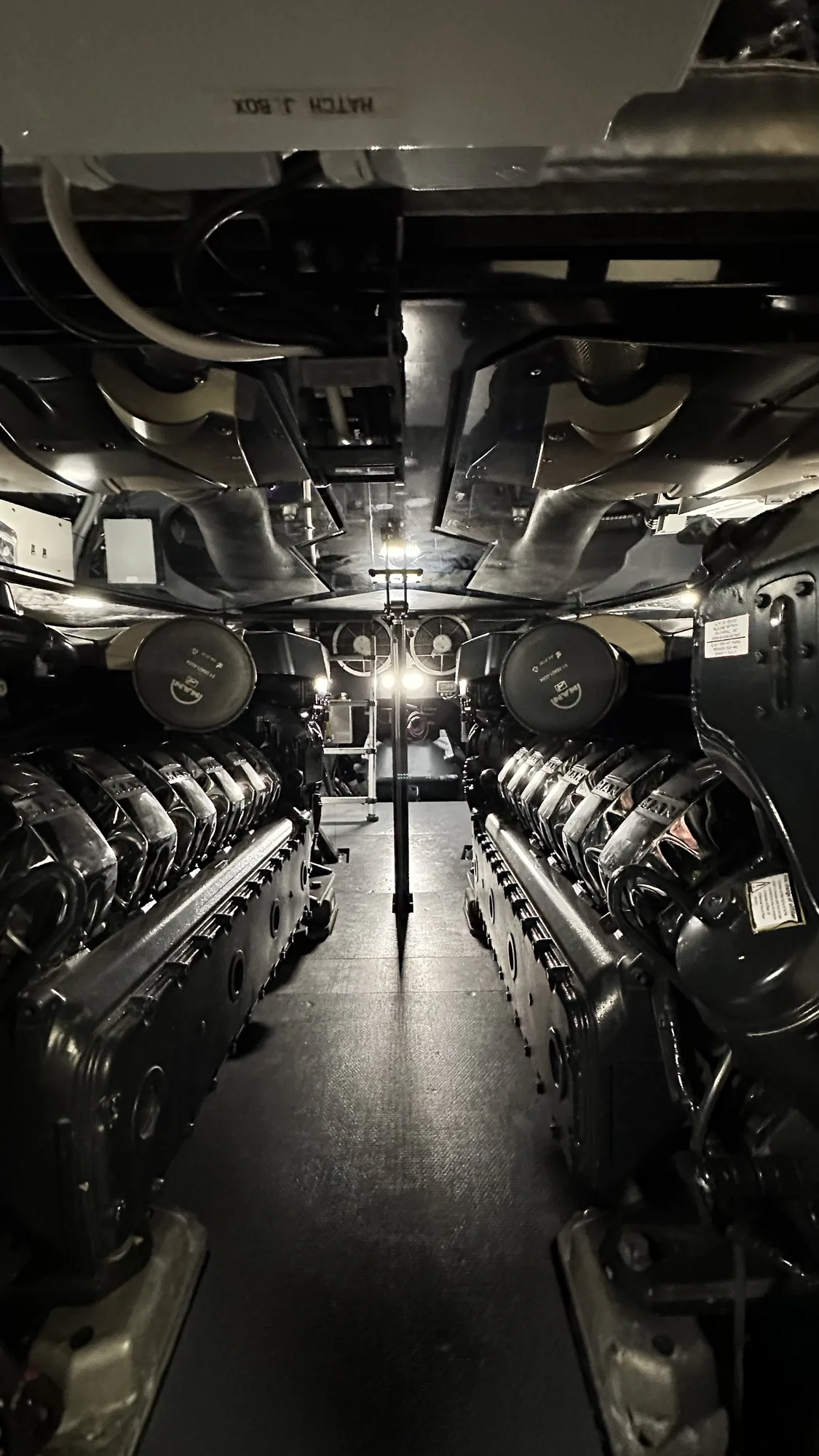
Most buyers walk into an engine room, see white paint and shiny valve covers, and relax. But a detail only tells you it was cleaned, not how it was maintained.
A maintained engine room and a detailed one are two different animals. A detail takes half a day. Maintenance takes years. One hides the other.
I am a yacht broker, not a surveyor and not a mechanic. None of this replaces a survey and an engine survey, and I recommend both on every deal. This is what to look at first, so you do not spend that money on a boat that was never going to make it.
What does a well maintained engine room actually look like?
It looks used, not staged. Light dust on flat surfaces, dry bilges, hoses of consistent age, matched clamps, labeled wiring, no fresh paint. Nothing wet, nothing crusty. The mechanic left it clean but not cosmetic, because he was fixing things, not selling it.
People get the dust backwards. Honest dust is a good sign. It settles and stays on surfaces that have been dry, and it does not stick to oil film or a weeping hose. Run a finger along a strainer bracket or the outboard face of a stringer. Gray and dry means it has not been leaking. When every surface shines, there is no baseline, so look where the detailer could not reach.
The salt trail
This is the most useful tell on the list and almost nobody checks it. Saltwater leaks document themselves. Water gets out, water evaporates, salt stays. You get a white or gray crust in a shape, and the shape points uphill to where it came from. A ring of powder on the low side of a hose barb. Crust along the bottom of a heat exchanger end cap. A trail down the face of a raw water pump.
Here is the tell. If somebody wiped the fitting and never fixed it, the fitting is clean and the salt sits on whatever is directly below. On the stringer, on the outboard side of the gear, in the corner of the drip pan. Salt does not fall far. Follow it up and you find the leak.
Coolant does the same, drying into a pink, green or orange crust at the pressure cap, the tank seam, or a clamp joint. A stain with no wet got a rag, not a wrench. Bring a real flashlight and get low, because nobody wipes the undersides.
Paint that is newer than the boat
Fresh bilge paint is not a red flag by itself. But paint is opaque, so the question is what went under it. Find where it stops. Somebody covering a problem paints what is visible and quits where he can no longer reach. Bright where you can see, chalky behind the engines and under the outboard stringers, means a schedule, not a refit.
Then look at what got painted that should not have been. Paint over clamps, over a hose barb, bridging a gasket seam. That sprayer did not mask, and any leak there is now under a skin that hides it for a season. Paint on heat exchanger end cap fasteners tells me the cap has not been off. And rust bleeding back through new paint is an active weep.
How do you tell how old a boat hose is?
Read it. Fuel hose has to be marked along its length with its type, its maker and the year it was made (33 CFR 183.540). Roll the hose over and the year is right there. Most coolant, exhaust and raw water hose is dated too.
Use these as working numbers and let your surveyor set the real ones. Closed cooling hose is generally considered good for six to eight years. Fuel hose over ten years old gets called out regardless of how it looks. Wet exhaust hose goes soft, soot stained or bulged at the clamps when it fails.
Then squeeze them. Good hose is firm and springs back. Bad hose is hard and crackly, or swollen at the ends. Look for cracking, blisters, or white powdery residue, which is coolant permeating the wall. On fuel hose, wipe a clean rag down it and smell the rag. Fuel smell means it is permeating even though it looks fine.
One new hose among old ones
If every hose is dated 2011 except one dated last year, somebody replaced exactly one hose. They did not do the system. They did the hose that failed. That is reactive maintenance, and the next hose in that run is the same age as the one that let go. What you want is six hoses dated within a year of each other with matching clamps. That is a service, done by somebody who knew hoses age together.
Hose clamps tell you who worked on the boat
Nobody skimps on clamps to save money. They skimp because they were in a hurry. Clamps should be all stainless, band and screw. The trap is a stainless band paired with a plated carbon steel screw housing. Those rust from the screw out and let go, so one rusty housing on a clean band means a hardware store clamp on a boat.
Exhaust hose should be double clamped at every joint. Count them. Elsewhere the rules are less absolute than dock talk suggests, so read the consistency. Doubled everywhere or nowhere means one person had one standard. Doubled in some spots, single in others, three brands in one compartment, means the boat got whoever was cheapest that week. Rusted clamps on a new hose is worst of all. Somebody reused the old ones.
The raw water side is what actually kills engines down here
Down here saltwater is the enemy, not hours. Follow it from the seacock forward.
The strainer. Clean basket, clear bowl, good gasket, a lid that seals without being cranked onto a stack of tape. Grass and shell means a neglected intake. Weeping around the base is a leak on the wrong side of the seacock.
The pump. These weep at the cover plate and at the seal behind the impeller, so look for a salt trail down the face and a stain at the weep hole underneath. Most good yards here replace the impeller every year. Ask when it was done. A vague answer is a budget line.
The heat exchanger. End caps should come off for inspection and cleaning roughly every other year. Ask when. Paint bridging the gasket seam or seized fasteners means they have not been off. Salt crust under a cap is a leaking gasket. Inside, sea grass and dead zinc is normal. Pieces of rubber impeller is not. The pump ate one and nobody chased the parts.
The pencil anodes. Small zincs threaded into the heat exchanger and sometimes the aftercooler, replaced by the time they are half gone. If it comes out as a bare threaded plug, that anode has done nothing for a long time. Cheap part, very expensive part behind it, and the best proxy I know for whether anyone maintained this boat or just ran it.
Green or white powdery corrosion at a raw water joint, or bronze that looks pink instead of gold, is dezincification. Metal being eaten, not stained.
Belts, belt dust and the drip pan
Check belt faces for glazing, a hard shine instead of a matte finish, and twist a belt to find cracks across the ribs. Then look for black rubber dust. A little in the grooves is normal wear. A pile on the mount below the alternator means misalignment, which is a bearing or a bracket, not a belt.
The drip pan under each engine catches everything above it, so it gets emptied first before a showing. If there is fluid, the color is the story. Clear water with salt at the edges is raw water. Coolant is the closed system. Black or brown is engine or gear oil. Reddish is transmission fluid. Diesel smells like diesel and floats. An engine that never leaked still has a faintly dusty pan. That is what right looks like.
Wiring: tinned and loomed, or tape and butt connectors
Good looks like tinned copper, so the strands are silver rather than bare. Wire in loom, supported at intervals, not draped over the exhaust. Heat shrink terminals, properly crimped, labeled at both ends.
Bad looks like bare copper going green, butt connectors wrapped in electrical tape, wire nuts, which belong in a house and never on a boat, and a ground bus stacked six deep. Green corrosion at a terminal is the same story as salt on a hose.
Why should you look at the generator first?
Because nobody else does. The generator runs hard, gets serviced last, and the detailer skips it because it hides in a sound shield. Open that shield and you see the boat’s real maintenance history, unpolished, on a machine with the same fuel, raw water and exhaust systems as the mains.
Check the same things. Salt trails, hose dates, clamp quality, the pump, the mixing elbow, the anodes. If the mains are immaculate and the generator is rusted with a weeping elbow, the mains were cleaned for you. Compare hour meters too. Nine hundred main hours against four thousand generator hours means the generator did the real work.
When the records and the engine room disagree
Ask for records before you go look, then see whether the two stories match. Records saying the impellers were done in the spring, on a pump with a paint bridged cover plate and seized screws, do not match. An invoice for six hoses on an engine wearing hoses dated a decade ago does not match. A logbook with no part numbers is memory, not a record.
Good records are boring. Dated invoices from a named yard, part numbers, hours at service, a rhythm to them. Boats that get small jobs done constantly do not need big ones. Nothing for three years and then one large invoice right before listing is a boat that got prepped for sale, not maintained, and the price should say so.
What is negotiable, what is expensive, and what means walk
Negotiable. Hoses, clamps, belts, impellers, anodes, filters, a strainer, tired paint, bad wiring at a few terminals. Parts and labor, all quotable. Negotiate against a written estimate, not a feeling.
Expensive, so price it first. Heat exchanger and aftercooler service, exhaust elbows and risers, rewiring the engine room, a generator needing real work, transmission service, motor mounts, anything involving a fuel tank. Get these quoted inside the survey period.
Walk. Signs of a serious overheat, meaning heat damaged paint on the exhaust or a scorched hose. Saltwater in the oil, which shows as a milky dipstick or a bad oil analysis. Corrosion into structure rather than on it, so soft or crumbling engine beds and stringers. A seller who will not let a surveyor open anything, or run the engines to temperature under load. And any boat where the story changes.
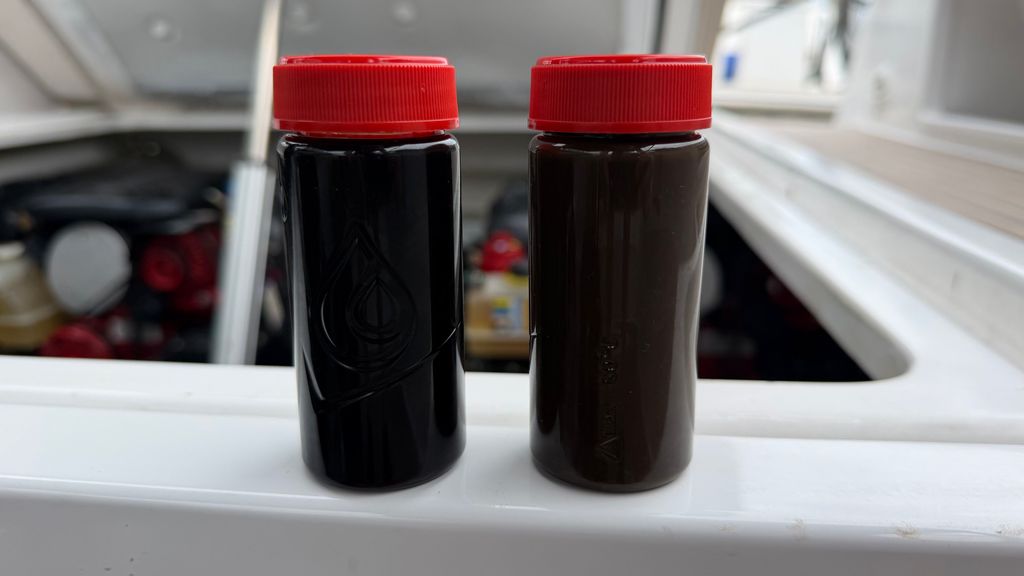
None of this makes me a surveyor. It makes me somebody who can tell you, standing there on a Tuesday, whether a boat is worth survey and haul out money.
If you are looking at a boat down here, have not talked to a broker about it yet, and want a second set of eyes in the engine room before you write an offer, call me.